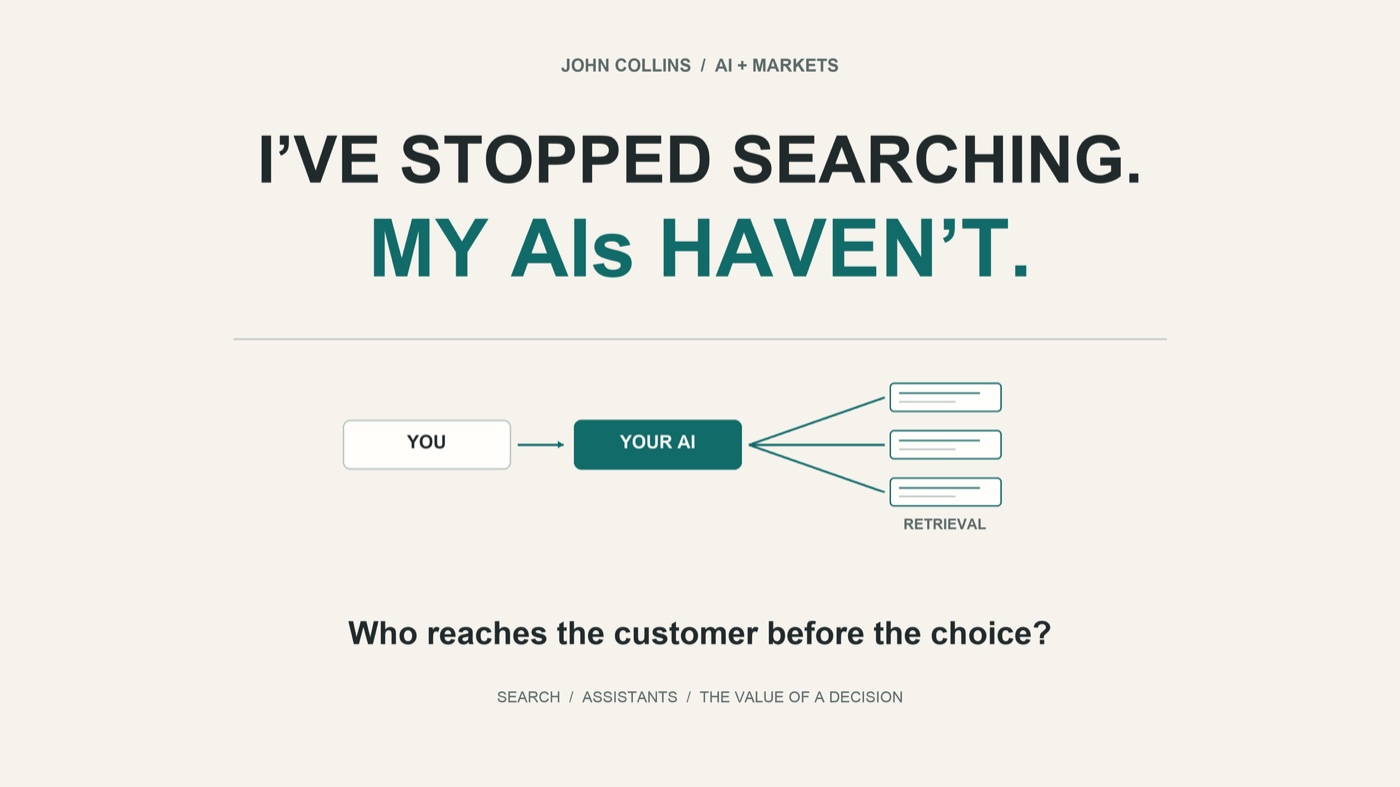
I’ve stopped using search. My AIs haven’t.
Agents still search, but the human no longer has to visit the search engine. The commercial question is who controls the decision, and who gets paid when it is made.
Latest research / Knowledge work / 1 Nov 2026
The division of labour is becoming part of the output. An audit of one research machine shows what that changes for knowledge work.
Read the article
Unique recorded model responses
Occurred in delegated tasks
One machine. A much larger workflow.
25 task families · 10 September–5 October 2026.
Recorded activity, not a measure of productivity or simultaneous agents.
Read the change
The interface changes. The business changes. The infrastructure has to follow. Examine the evidence at each step.
Agents still search, but the human no longer has to visit the search engine. The commercial question is who controls the decision, and who gets paid when it is made.
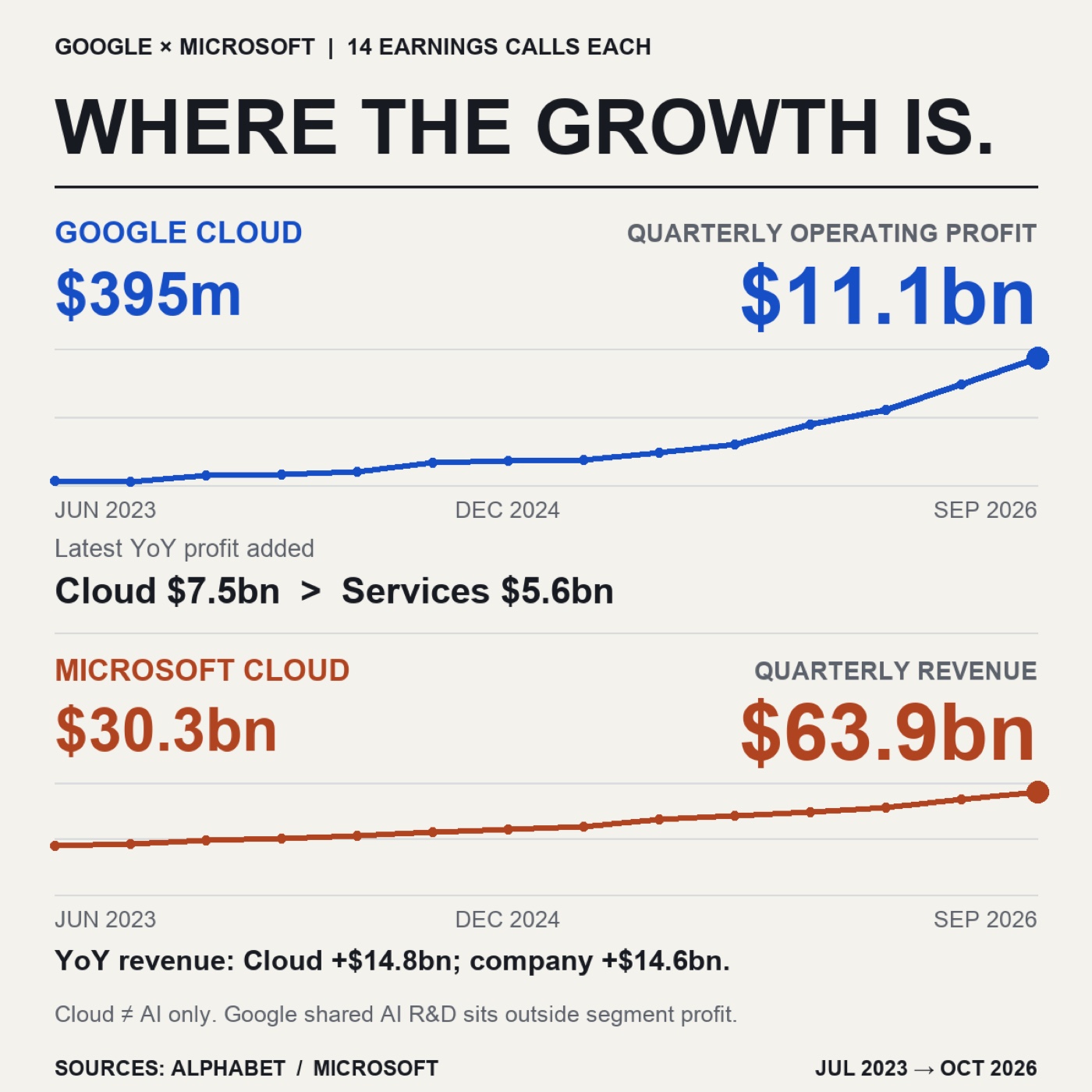
Fourteen announcements trace a change in where Alphabet and Microsoft earn their growth. The figures are cloud, not pure AI, but the implications for knowledge work are substantial.
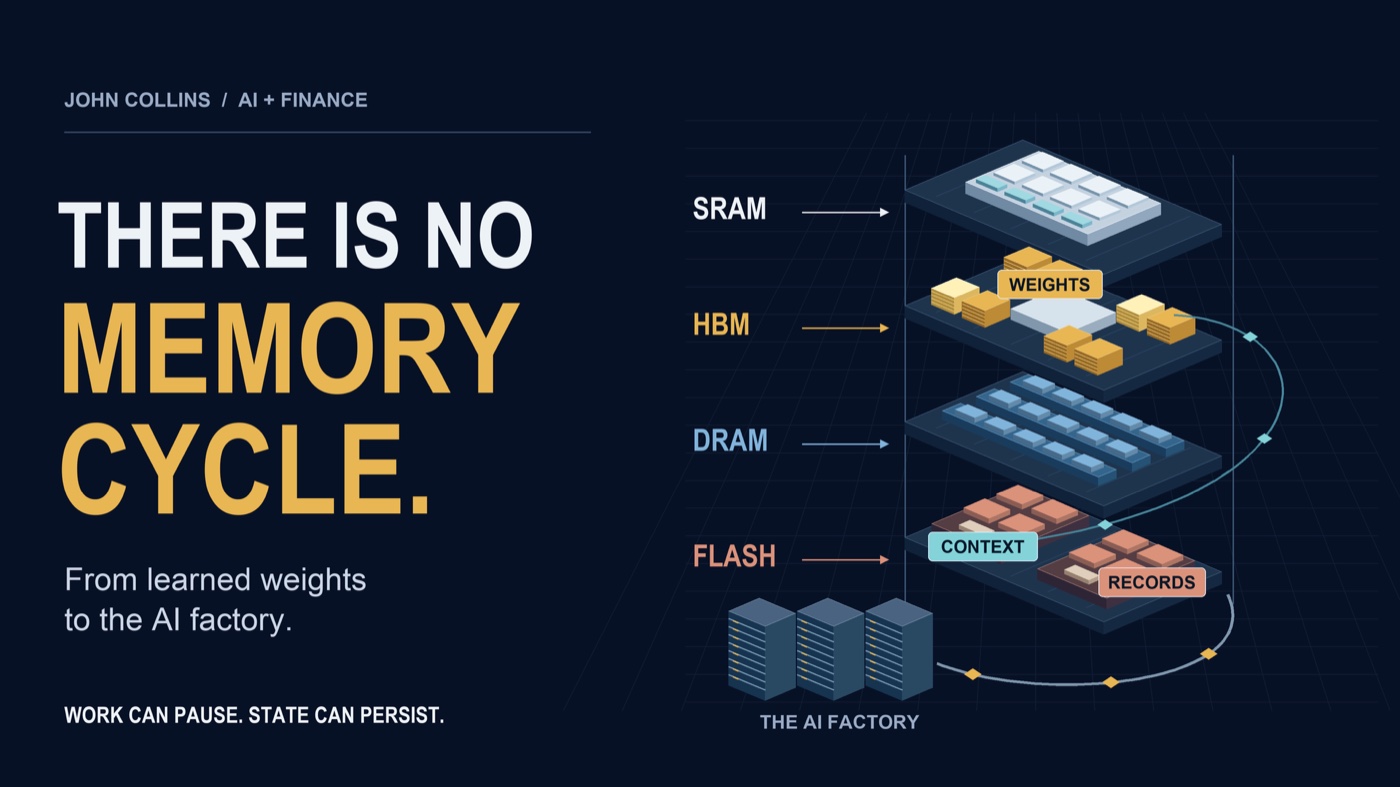
Follow memory from how deep learning models learn to how AI racks and factories are built.
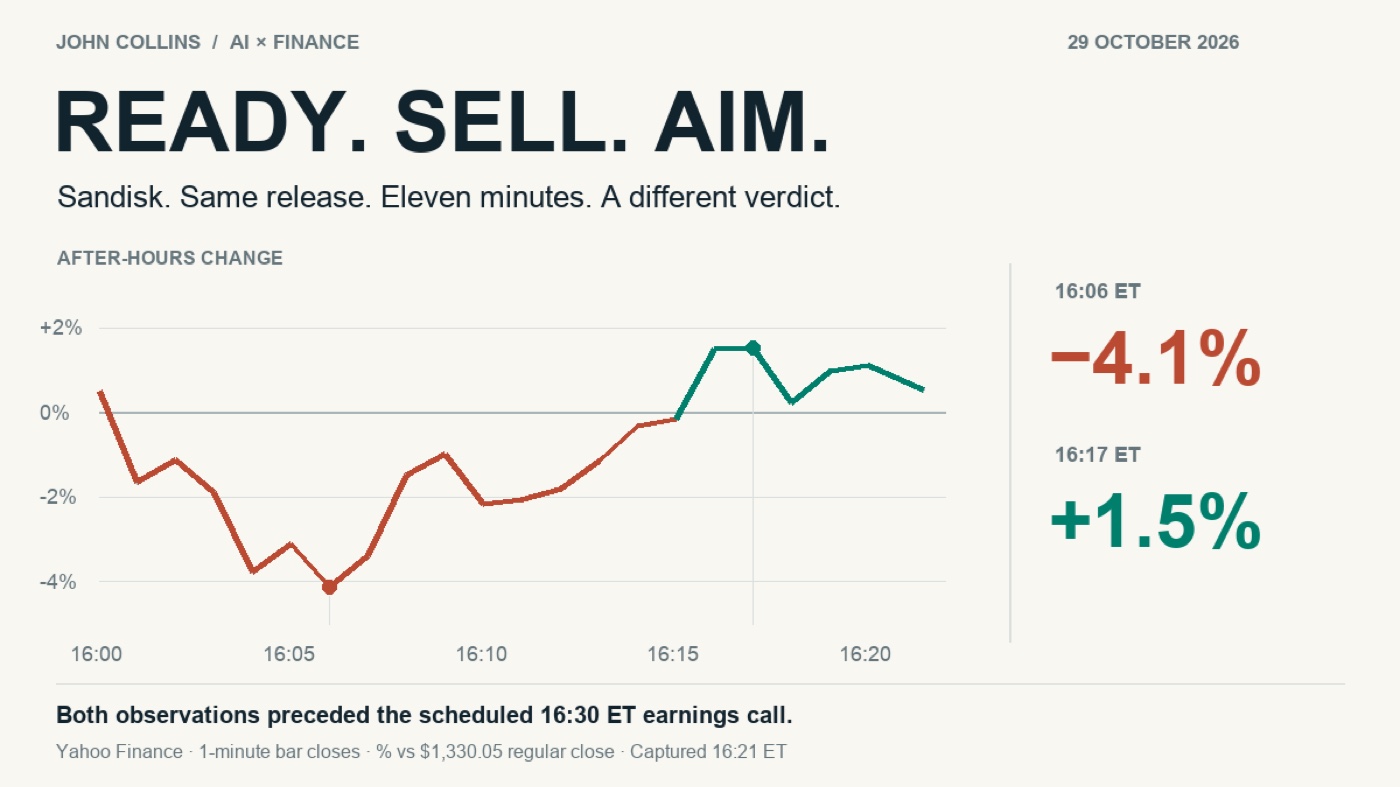
Sandisk’s after-hours reversal before its earnings call puts a short investment horizon beside multiyear commercial commitments. Separate the tape from what companies actually reported.
Illustrative workflow; measured delegation share. The published article explains the audit and its limits.
Inside the work
Objectives become investigations. Findings create new tasks. Evidence, working context and intermediate results survive individual model calls.
The important question is what useful work becomes possible when a person no longer has to organise every intermediate step.
Inspect the case studyThe publication archive
Stacy Rasgon’s modelling example suggests a practical experiment: reconstruct the history independently, then use the differences to challenge assumptions carried forward for years.
A market calculation found seven historical matches. Changing one relevant comparison left none. The useful test for AI is whether it can reproduce the result and challenge the assumptions.
Meta and SpaceX show compute doing two jobs: helping teams create new products, then running what customers use. The relevant capex question changes when the business can create new capability as well as serve existing demand.
Less dependence on packaged software can come with much greater infrastructure use. Jane Street and data-centre forecasts make that transition concrete.
The build-out looks different when historical analogies are tested against earnings data and the economics of using AI.

John Collins / Deep Vertical AI
I investigate frontier AI through practical work, technical research and the consequences for knowledge work, businesses and investment decisions.
About the work